Overview
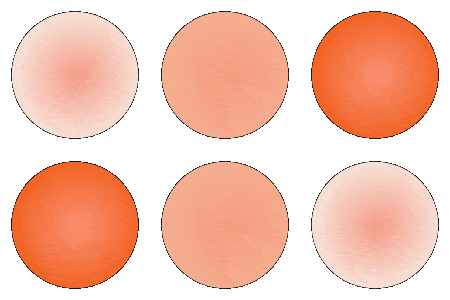
Striker
This style may not reveal (strike to) its target color until fired.
Reactive Potential
Contains: Lead (Pb)
May React With: Selenium (Se) / Sulfur (S)
Forms of Glass
Sheet Glass (-0030, -0050), Frit (-0001, -0002, -0003, -0008) and Rod (-0576)
Detailed Information
About 001215 Sheet Glass
Cold Characteristics
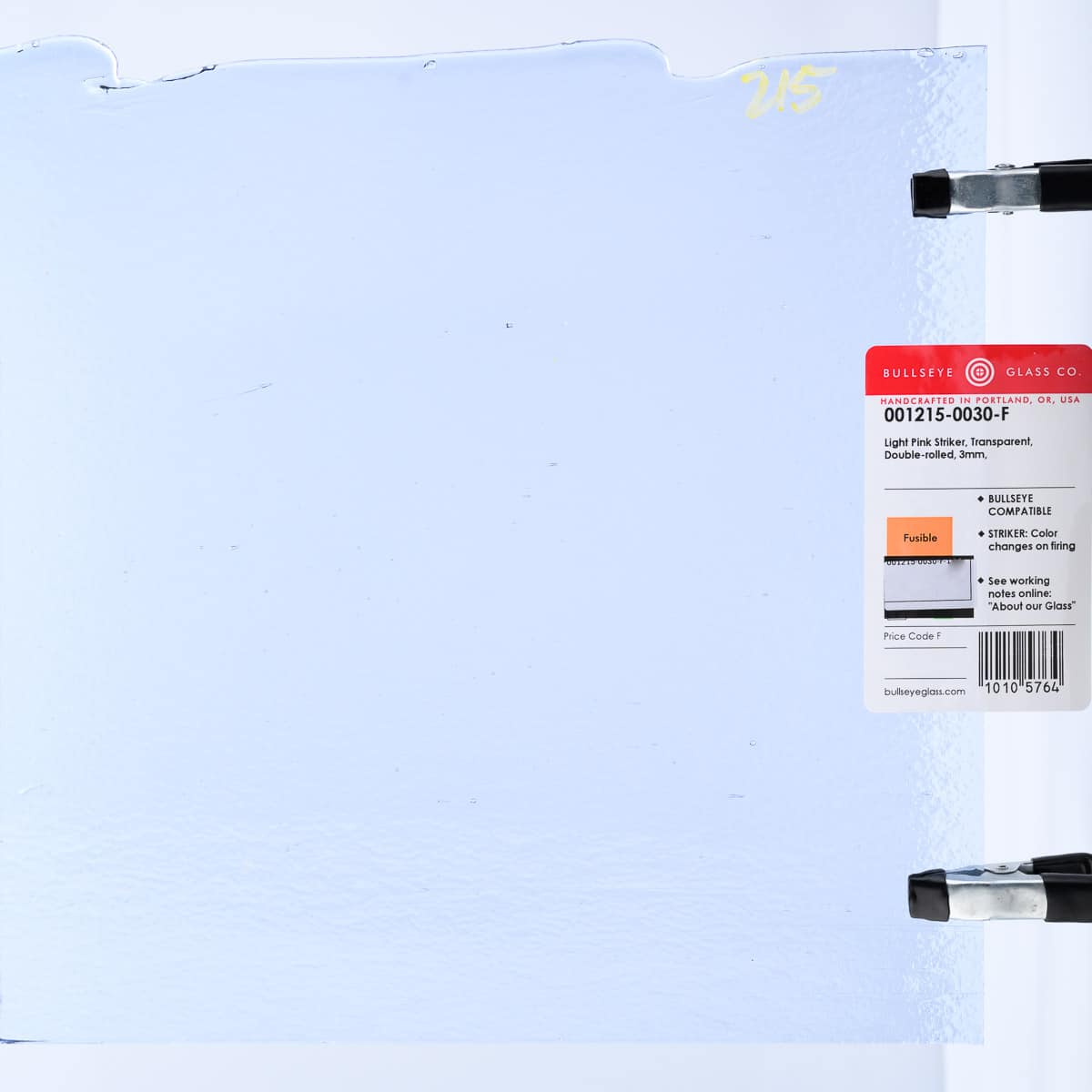
Varies from lighter to darker; sometimes with lighter dappling in single-rolled sheets. Generally lighter and slightly more blue/pink than Cranberry Pink Transparent (001311).
Working Notes
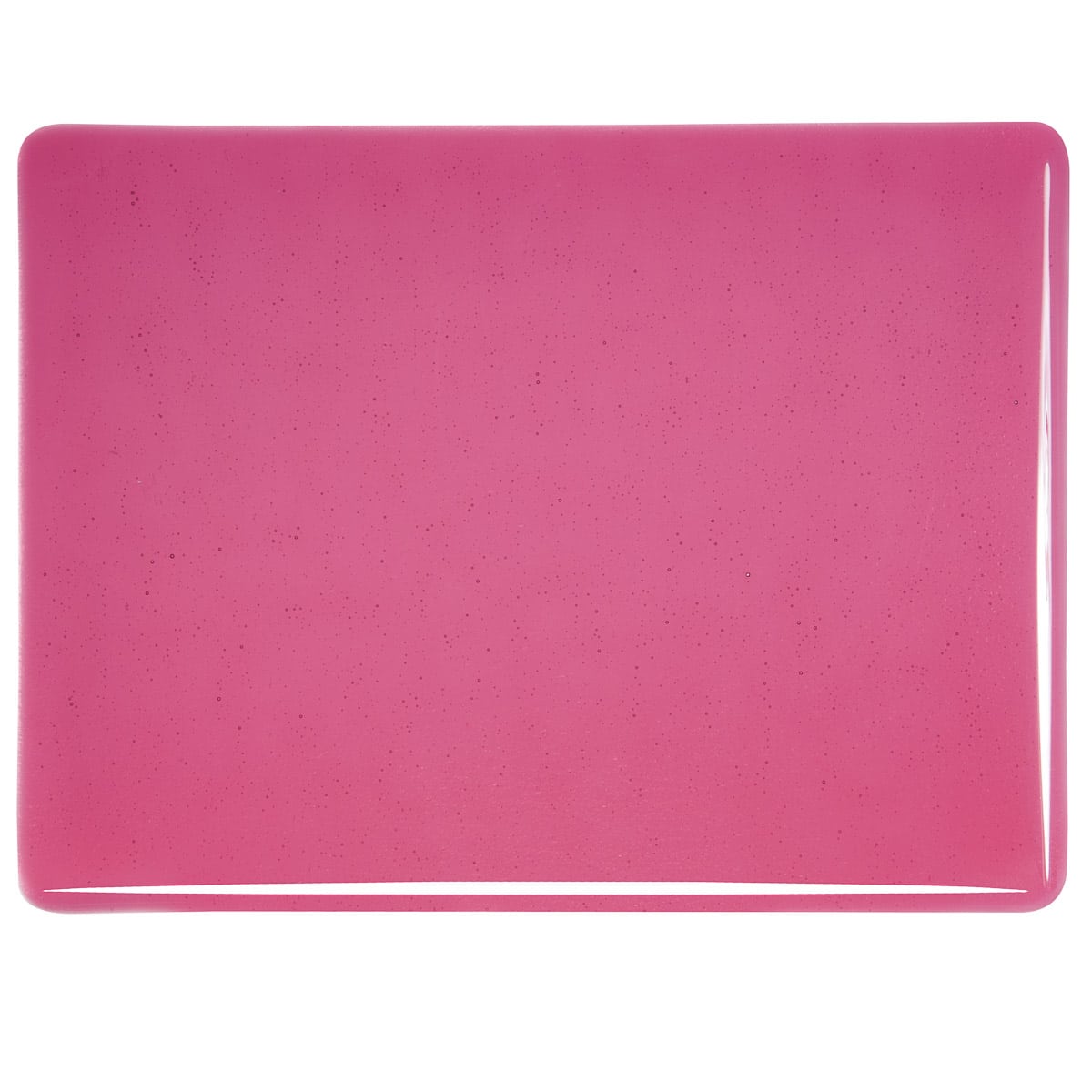
Color usually deepens on firing. Possible dark interface reaction with selenium and/or sulfur glasses (000137, 001122, 001125, 000124, 000125, 001137, 001437). Less viscous (softer) than most other glasses.
Some striking glasses that use gold as their coloring agent, like this one, must be fired with a 2 hour hold in the range of 1200-1225°F during the initial stages of the firing cycle in its first firing to properly develop their color. If fired without this hold, or in a kiln that runs hotter than average, they may not strike at all, or they may strike but appear spotty and have a blue-brown cast, as opposed to their intended color. We have found that holding at 1200°F for 2:00 offers consistent color development with this style across a range of kilns and production dates, and functions as an adequate bubble squeeze for most projects.
If your work depends on a bubble squeeze at 1225°F we recommend doing a small test on this style and other striking transparent pink glasses before beginning a project as they require precise heating to strike properly. For full information and testing strategies see the article Properly Pink, Purple and More.
Fusible / Bullseye Compatible
Example firing schedule for a 6mm full-fuse that includes 1215 Light Pink Striker in its layup.
| RATE | TEMPERATURE | HOLD TIME |
|---|---|---|
| * | (1200ºF-1225°F) | 2:00 |
| 600ºF | 1490 | 0:10 |
| 9999 | 900 | ** |
**Remainder of cycle depends on the thickness of the piece. Consult the Bullseye Annealing Chart.
For color-sensitive projects, we recommend testing the cycle you plan to use by fusing a small sample of a similar setup in the same kiln as the project to best predict final color results.
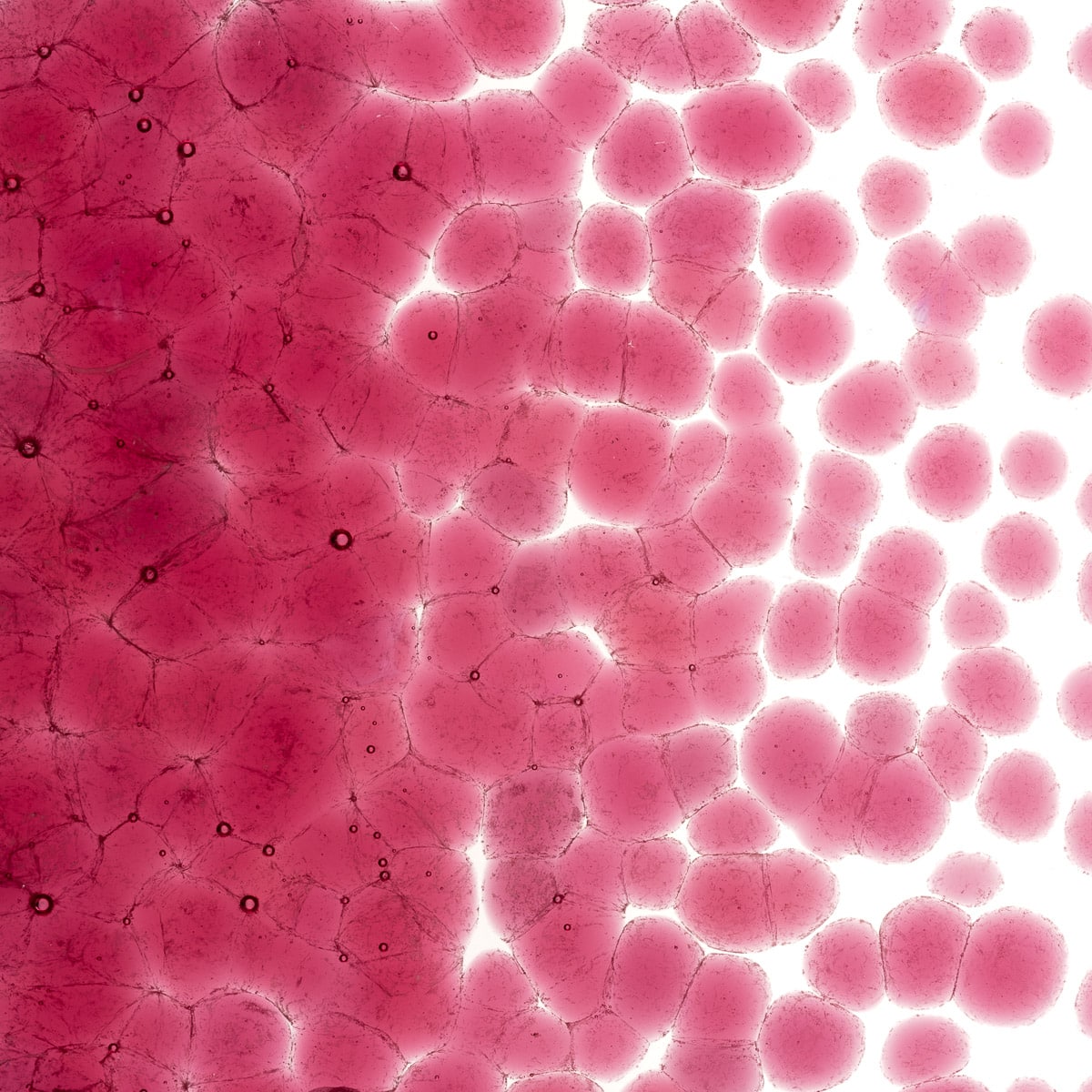
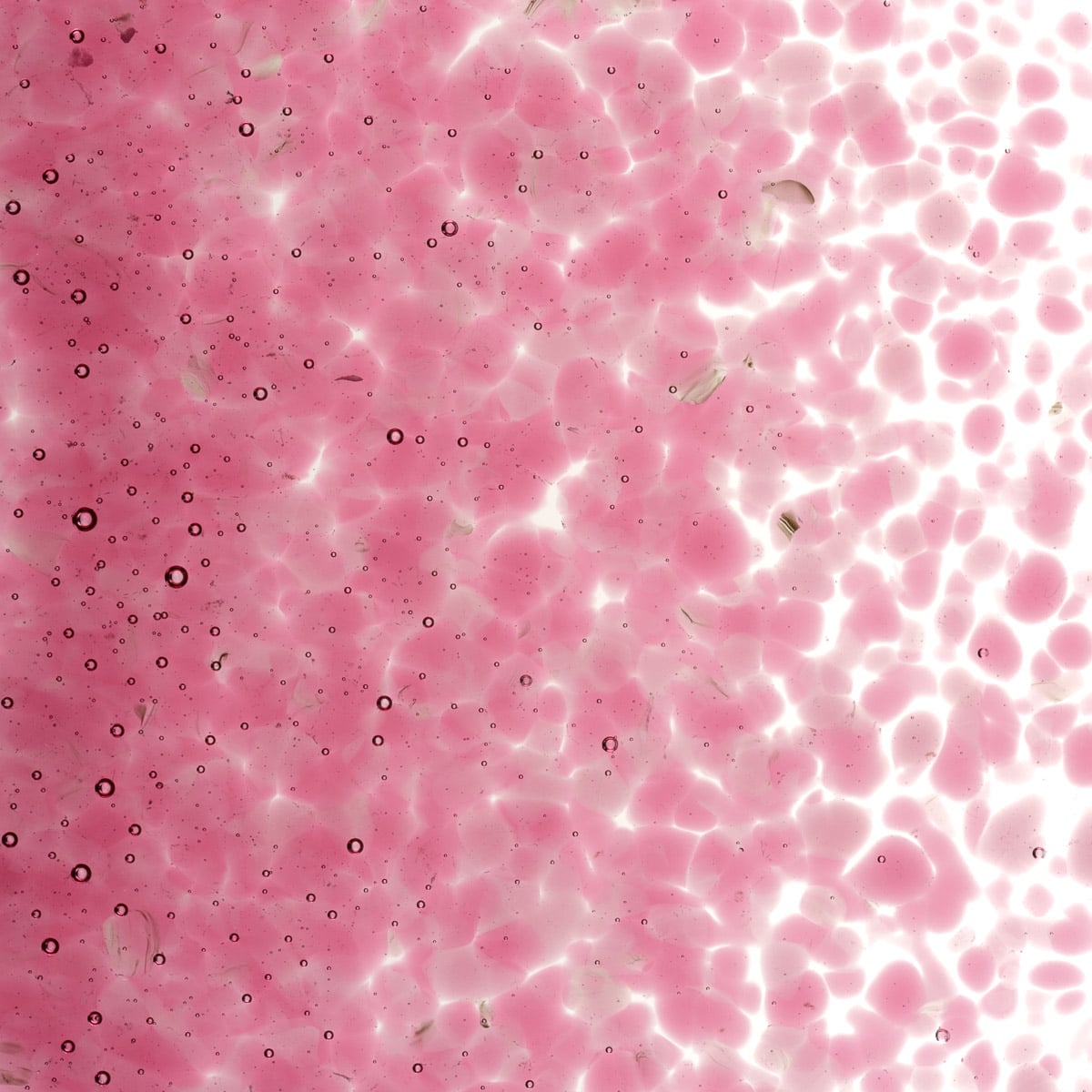
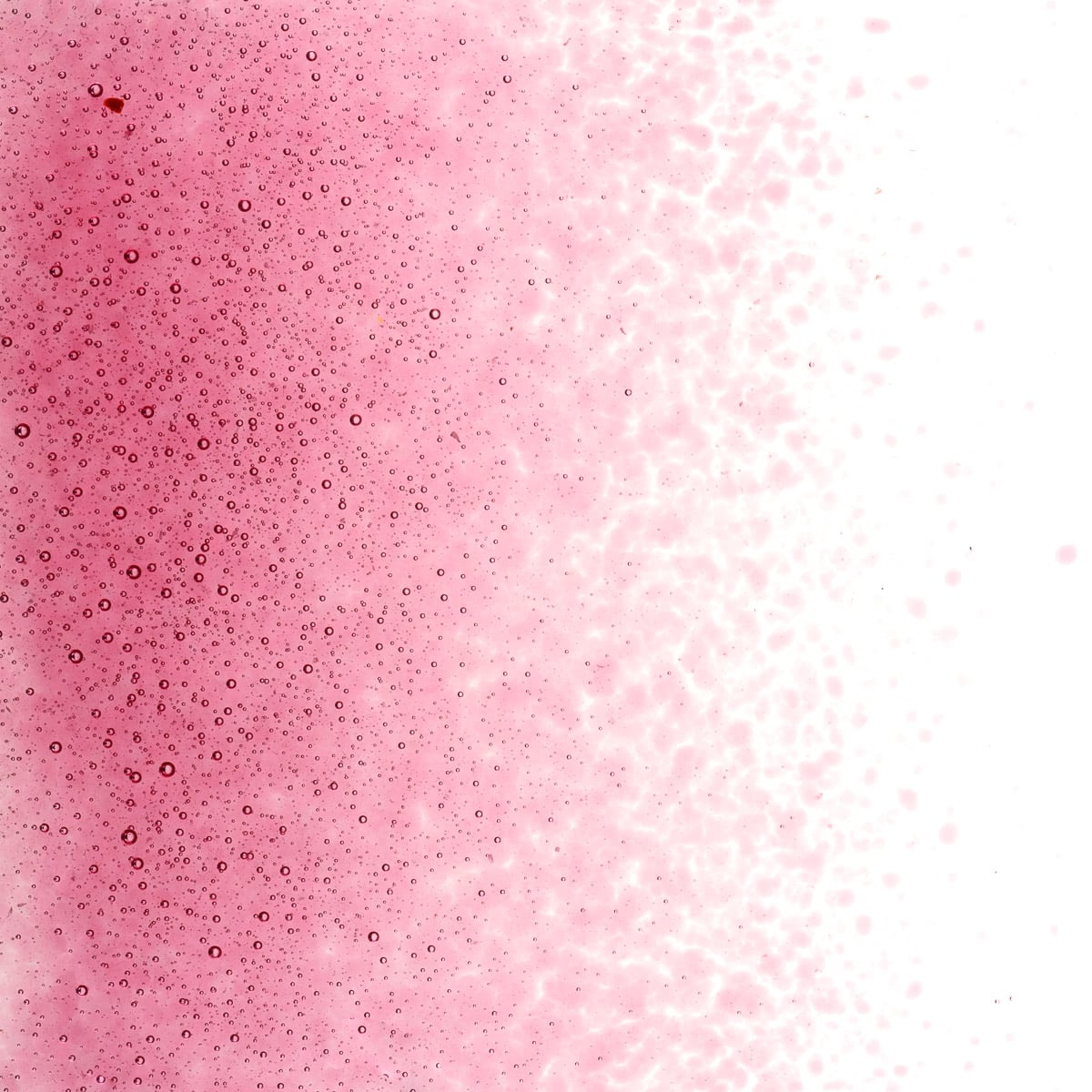
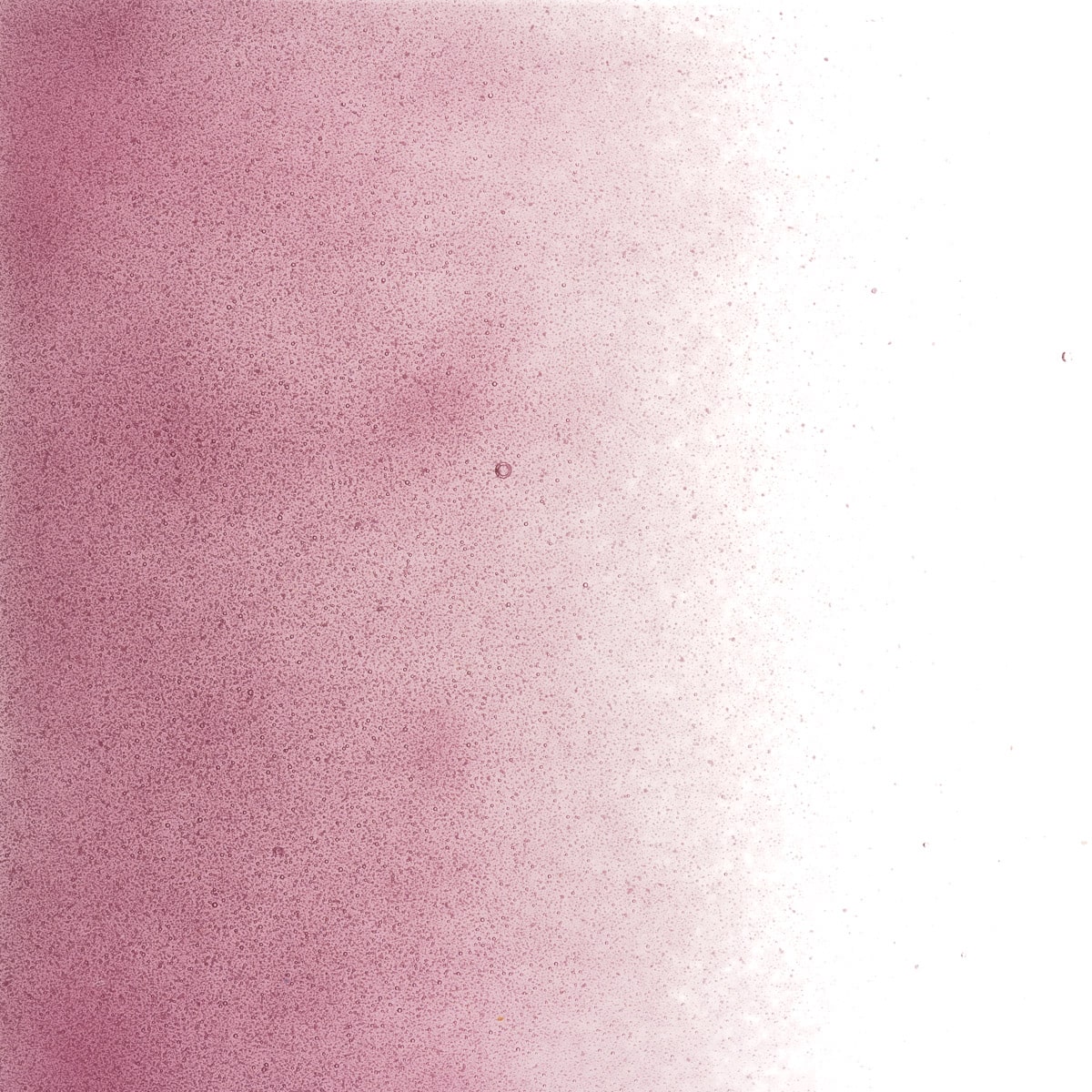
About 001215 Frit
Working Notes
See sheet glass notes for this style.
About 001215 Rod*
Cold Characteristics
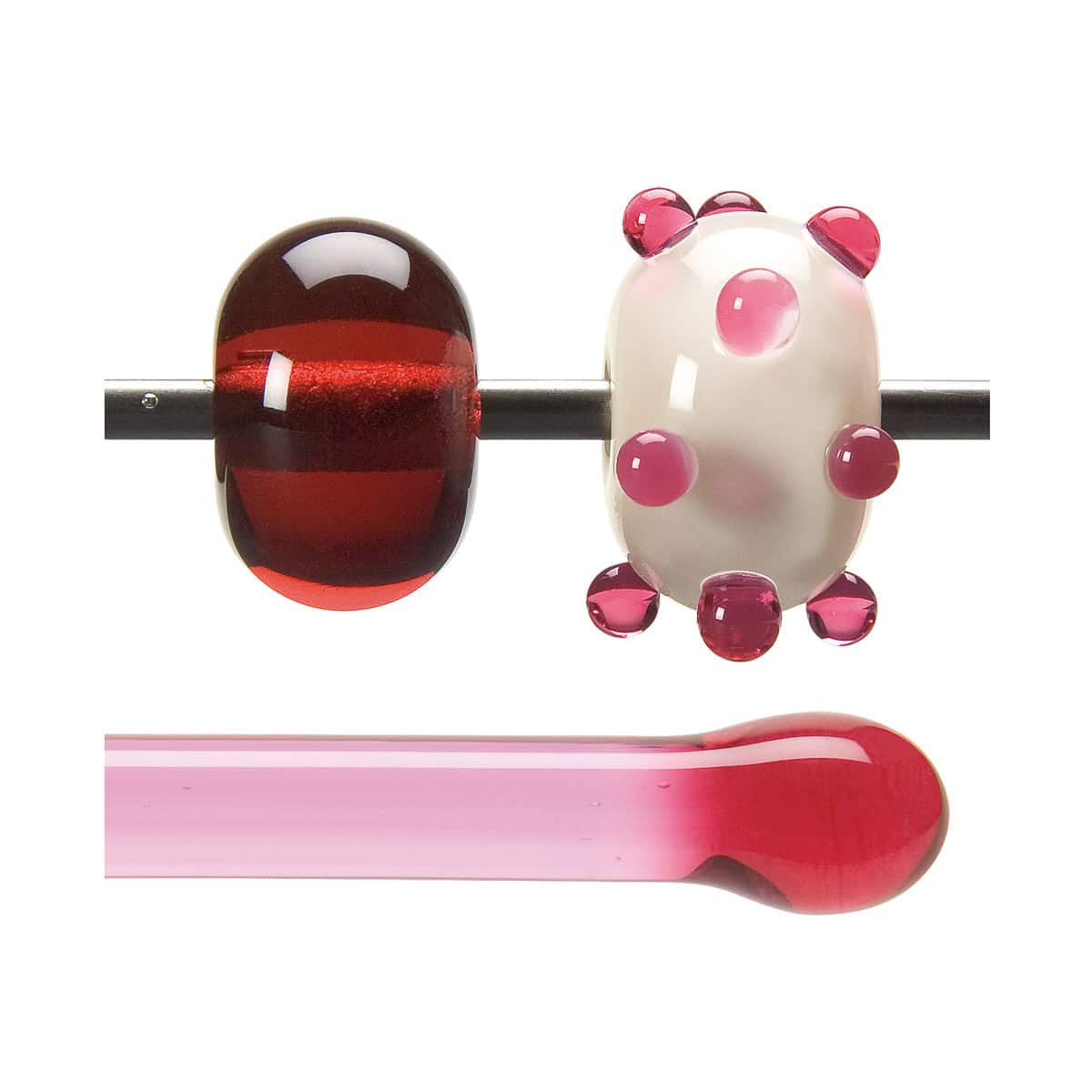
Pale transparent blue to lavender. In some lighting may look similar to Neo-Lavender Shift (001442-0576), Cranberry Pink Transparent (001311-0576), and Cranberry Sapphirine Transparent (001342-0576).
Working Notes
Torch: 001215-0576 strikes to a transparent pink in the flame. Work in a cooler, oxidizing atmosphere. May develop a light brown color on the surface of the glass if worked in the presence of too much propane (or fuel). Light Pink strikes more reliably in larger applications, such as a core bead.
Kiln: A linear, streaked design may develop upon firing and may be visible whether fired lengthwise or on end. Hue and saturation may also differ slightly when compared to sheet glass; a wider range is accepted due to changes that occur in the forming process.
See Working Notes under Sheet Glass tab for additional firing information.
Other: The resulting light pink is more transparent than torchworked sheet glass of the same style (001215-50, 001215-30). Consider encasing with clear to protect the surface from developing a light brown color in the hotter, neutral flame chemistry that you would use for most other styles. We advise labeling all striking glasses.
*Rod discontinued in 2017